Text
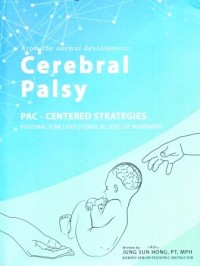
Cerebral Palsy From The Normal Development : PAC - Centered Strategies
Compared with the last 20 years, the prevalence and origin of children with cerebral palsy has changed. The characteristics of children with cerebral palsy vary in different countries from the angle of medical surviving skills for preterm infants. Even there is no doubt that known data apply only to well developed countries, there is a remarkable change due to the cause of prematurity. In the past, children with cerebral palsy used to be present with hypertonus and fluctuating tone, which involves the whole body, with many children having spastic and athetoid quadriplegia cerebral palsy. If most children before were classified with a spastic or athetoid quadriplegia, there is now a change in trend to see more children with spastic diplegia. And this is primarily because of prematurity. Prematurity is now the main risk factor for cerebral palsy. The improved survival rate of very low birth weight(less than 1,500 g) and extremely low birth weight infants(less than 1,000 g) has contributed to the high occurrence of cerebral palsy in developing nations(Hagberg, 1993). Particularly, the updated clinical picture of spastic diplegic children has also changed to include diplegic children who were born at a full gestational age in the view of the characteristics of postural tone and quality of movement. The most updated picture of these children presents hypertonus of the lower extremities and distal parts of the body but with low tone of the proximal parts of body. The quality of movement problems also has changed. The old clinical picture characterized children with cerebral palsy as lacking or with stereotyped movement with a pattern of hypertonus, whereas the current trend sees children with spastic diplegia from prematurity who can move but move differently because of complicated damage around the subcortical area of the brain, such as the motor, and also visual problems which affect visual field and visual perception and the auditory tract including part of limbic system. The major problems of movement come from immaturity of the motor and sensory systems in processing information from the environment. This results in secondary problems as poor perceptual motor development and a lack of body concept with poor structural development, especially, bones, joints, and muscles including the skin. In addition, the perceptual-motor issues of children with cerebral palsy are multi-faceted. Their problems are due to damage to the central nervous system and the sensory impact from the environment. If the infant spends time in the incubator, this worsens their clinical picture. The NICU environment provides a different environment from that of the mother? womb. The poor movement experience does not give the infant adequate stimulation for growth and maturation of neuromuscular activity. Their sensory channels for movement are immature. These infants do not have the neuronal mechanisms necessary to prepare them for movement. The lack of movement limits structural maturation and development of muscles, bones and joints in the aspect of alignment, especially in the proximal part. The lack of weight bearing experience and good alignment of the joints causes poor development of bones. The problems are further enhanced by the infant? abnormal patterns, which put the infant? muscles and bones at a disadvantage for efficient movement. It is therefore important for therapists to learn about normal movement and how an infant gains or develops movement skills during development. The therapist has to have adequate knowledge about how an infant develops head control, arm support, and trunk control to be able to guide the child during treatment. It is also important for the therapist to learn about the elements of sitting, standing, and other activities to be able to improve the child? functions in daily life.
Ketersediaan
Informasi Detail
- Judul Seri
-
-
- No. Panggil
-
616.836 Jun c
- Penerbit
- Sl. : Sn.., 2019
- Deskripsi Fisik
-
vi, 170 hlm: ilus.; 27,5 cm.
- Bahasa
-
Inggris
- ISBN/ISSN
-
-
- Klasifikasi
-
616.836
- Tipe Isi
-
-
- Tipe Media
-
-
- Tipe Pembawa
-
-
- Edisi
-
-
- Subjek
- Info Detail Spesifik
-
-
- Pernyataan Tanggungjawab
-
-
Versi lain/terkait
Tidak tersedia versi lain
Lampiran Berkas
Komentar
Anda harus masuk sebelum memberikan komentar
 Karya Umum
  Filsafat
  Agama
Agama  Ilmu-ilmu Sosial
  Bahasa
  Ilmu-ilmu Murni
  Ilmu-ilmu Terapan
  Kesenian, Hiburan, dan Olahraga
  Kesusastraan
  Geografi dan Sejarah